An answer for both mental health & AI literacy legislation


Working in government and education policy, I spent a lot of time in the gap between what legislation says and what actually happens in practice. That gap is almost always where the real work is. Looking at the policy landscape around mental health and brain science in K-12 education right now, the gap is significant, and it's growing.
Here's what that landscape looks like, across the three levels where education policy actually operates.
Federal
The clearest federal signal on youth mental health has come not from legislation but from the Surgeon General, who has twice issued formal advisories declaring a youth mental health crisis and pointing to schools as part of the response. This does not make any actions necessary, nor does it come with funding or enforcement. It is, however, the federal government putting its credibility behind a specific public health framing: that schools are where we meet kids, and that the current moment requires a response.
The funding side tells a different story. In April 2025, the federal government eliminated more than $1 billion in school mental health grants that had been in place since 2022, following the devastating school shooting in Uvalde. Schools that had built programs around that funding were suddenly without it and what followed was predictable: districts started looking for lower-cost, more flexible alternatives. Things teachers could use without a new procurement cycle or a dedicated budget line.
In short, the federal government: “this is urgent, now go forth.”
State
States have moved faster and more concretely, which is expected. Twenty-one states, plus the District of Columbia, now require mental health education in K-12 classrooms. New York was first in 2016 and California followed in 2025. The trend is bipartisan, accelerating, and new requirements are passing every legislative session.
What those mandates don't specify is what to teach. They define the category of mental health education without naming a curriculum or a framework. Teachers in 21 states are legally required to address something, and then largely left to figure out how. The intent is absolutely spot-on, but what is missing now is the resource that makes the intent actionable.
A second wave of state legislation, moving even faster, is around AI literacy. Thirty-four states have issued official guidance on AI in K-12 schools. In 2026 alone, lawmakers across 31 states introduced 134 bills on AI in education. States are requiring written AI policies at the district level, integrating AI literacy into college and career readiness standards, and mandating that every district adopt a framework before students graduate.
Underneath it all, what these bills are really grappling with is: Why does AI feel so compelling to kids? Why do they stay on screens longer than they plan to? The legislative answer is to regulate platforms, which is only one part of the solution. The other part is understanding what makes them different from AI (or robots or machines, if that’s what resonates with them, I suppose..): their brains.
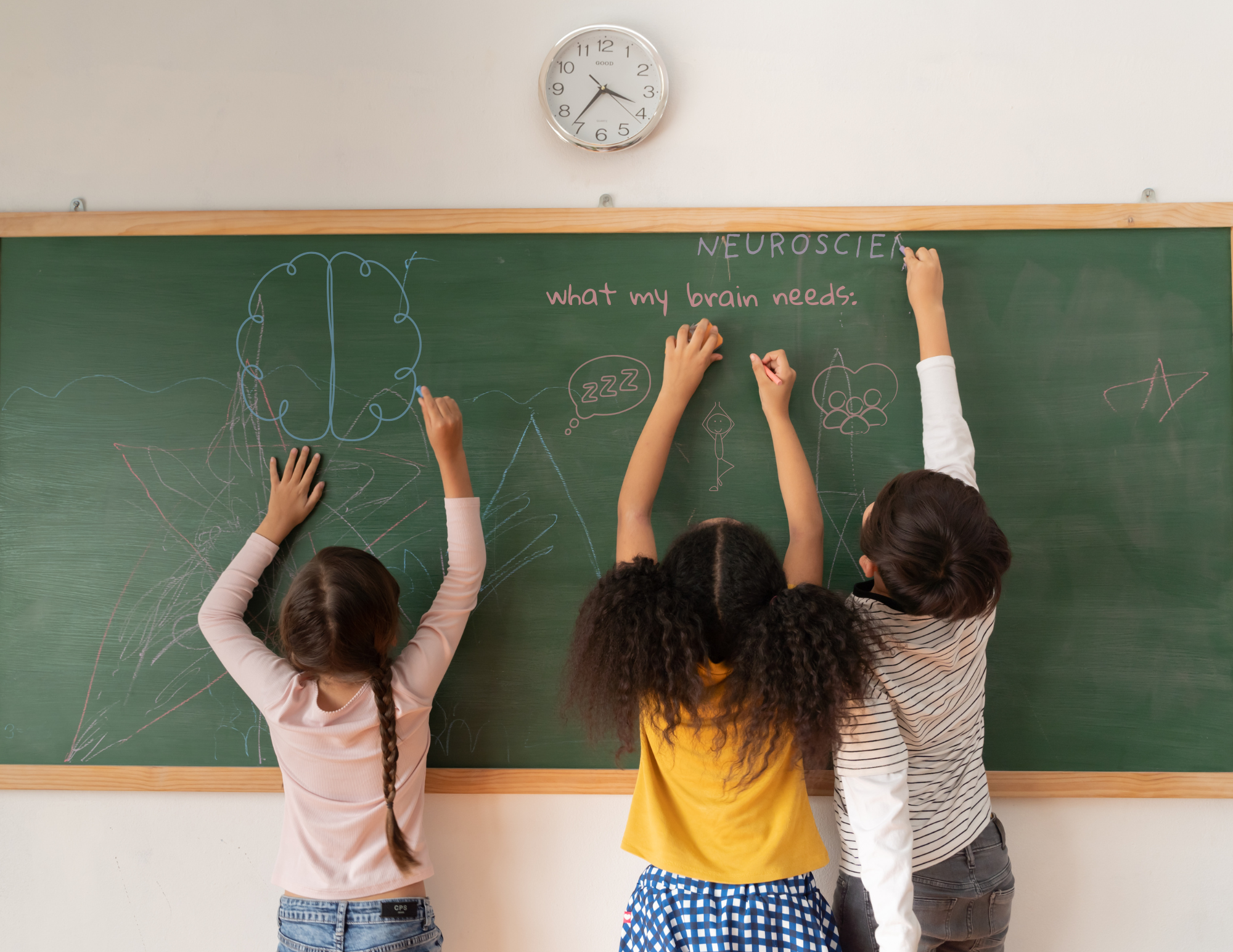
To us, that means this is not a technology problem, but a neuroscience problem. And even further, it is a curriculum gap.
The gap policy can't close
The through-line across all of this is that policy is good at naming what needs to happen but does not specify how. This is due largely in part because legislators aren't curriculum designers, and education in the United States is dictated mostly at state and local level.
In K-12 education, "local level" frequently means a teacher, likely with a full class and no planning period, trying to find something usable before next week. The distance between a mandate and a classroom is large, and falls on teachers to cross it.
This is precisely the space we are building for: a resource teachers can reach for, starting next Monday, that gives kids real language for what's happening inside them.
Bright Light Neuro is not building to be a compliance product. We exist because kids deserve to understand their own brains. At the same time, the legislative world is converging on something teachers have always known: kids can't take care of something they don't understand. States are passing mental health education requirements because something is deeply wrong with how young people are navigating the world, and they are grappling with AI literacy because technology is shaping children's brains in ways we are only beginning to understand.
Because of how science and SEL standards have evolved, what we’re building is technically considered supplementary education. Our view: understanding the brain is fundamental.