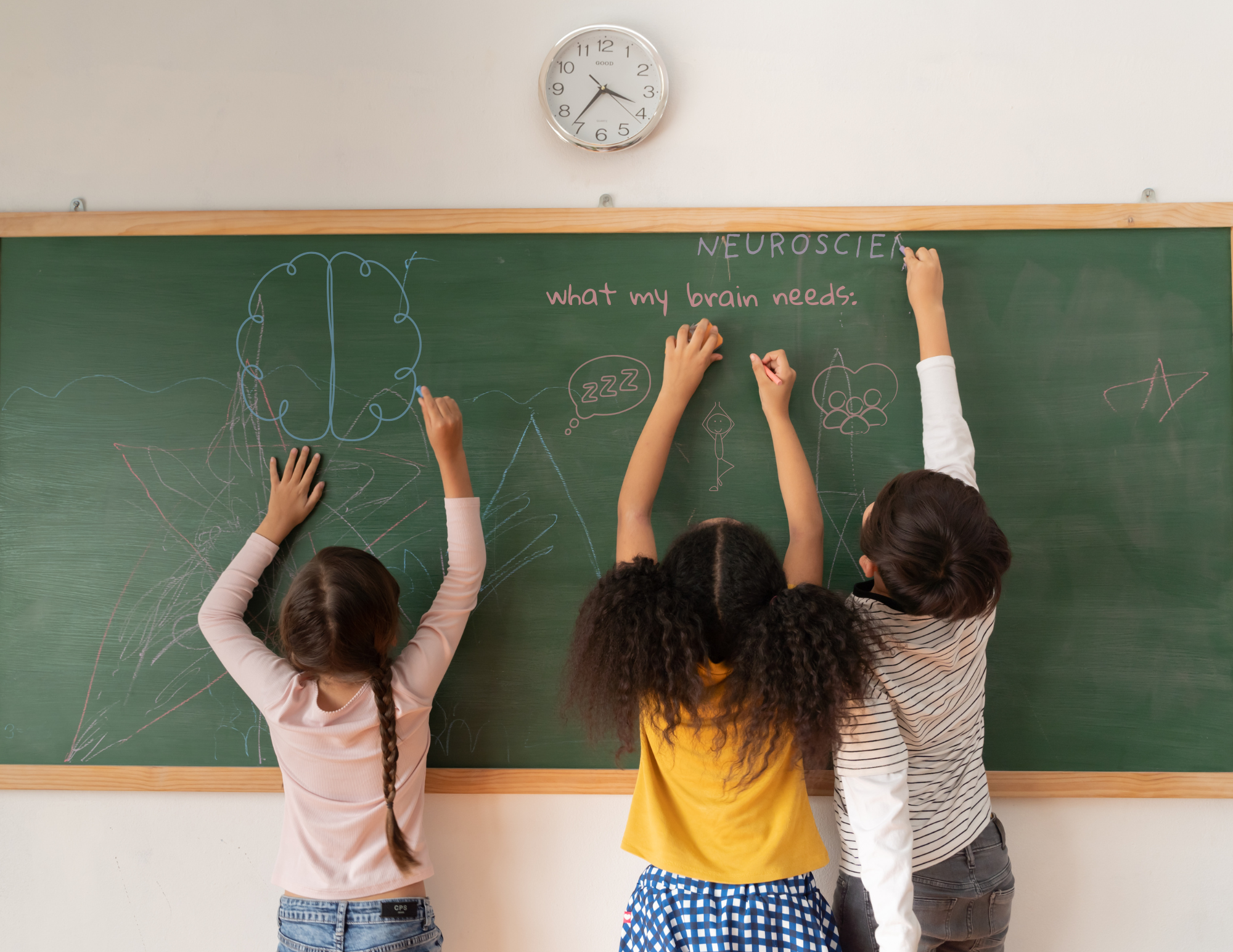
Why Brain Science Belongs in Childhood

The goal of education - and the broader aim of life - is to empower people to achieve the highest possible quality of life. We want to feel a sense of purpose. To wake up feeling healthy, to grow and learn. We want to be well. Not just physically, but mentally, emotionally, and socially.
Every part of this depends on the health of the brain. The brain is who we are; our thoughts, our feelings, our memories, our behaviors. And whether we realize it or not, the choices we make each day are either helping it or hurting it.
Wouldn't it make sense to teach kids about the brain so they can make informed decisions that support a healthy and happy life? Don't they deserve access to that knowledge and those skills?
Instead, kids are growing up without brain science at the very moment they need it most. The world they're navigating is increasingly complex - screens designed to hold their attention, access to a constant stream of global information, and pressure that starts earlier and earlier. 40% of parents say they are "extremely" or "very" worried their children will struggle with anxiety or depression (Pew Research Center, 2022). Children aged 8–18 spend more than seven hours a day on a screen (AACAP, 2025).
When I was teaching and looking for social-emotional learning (SEL) resources, it seemed obvious to me that I'd need to teach my kids about the brain - on the simple premise that if we want to take care of something, we have to know how it works. Think about a mechanic. They understand cars: how to diagnose a problem, how to fix it, and how to maintain the car so it lasts longer. You won't see many mechanics driving around on overdue oil changes or worn-out brake pads. They understand cars, so they know how to care for them. The same is true for us. If we want to take care of ourselves, we have to understand the one thing that makes us human: our brain.
I wasn't the only, nor the first, teacher who saw this need. It's why social-emotional learning is in classrooms across the country, teaching kids to manage emotions, build relationships, and make responsible decisions.
Brain science is the cornerstone of social-emotional learning. When kids learn about the brain, they understand SEL skills more deeply and can apply them more readily.
I saw this in my classroom, and I found it again in my thesis: when brain science is made developmentally appropriate, young children both understand it and benefit from it. Teaching kids about the brain helps debunk persistent neuromyths and feeds the future neuroscience workforce. It improves students' approaches to learning and lays a foundation for understanding human biology. And it builds health awareness, reducing stigma around neurological disorders, encouraging healthy choices, and giving kids the ability to think critically about the brain-related information all around them.
Kids didn't create this world, but they are the ones growing up in it. It's our responsibility to give them the understanding, skills, and words to make sense of what's happening inside them and around them. That understanding shouldn't wait until adulthood, it belongs in childhood.